Plucking one gray hair does not make several gray hairs appear around it. Repeated plucking, however, can cause thinning. The replacement hair will usually still be gray, so removing it does not resolve the cause of its color change.mythaad
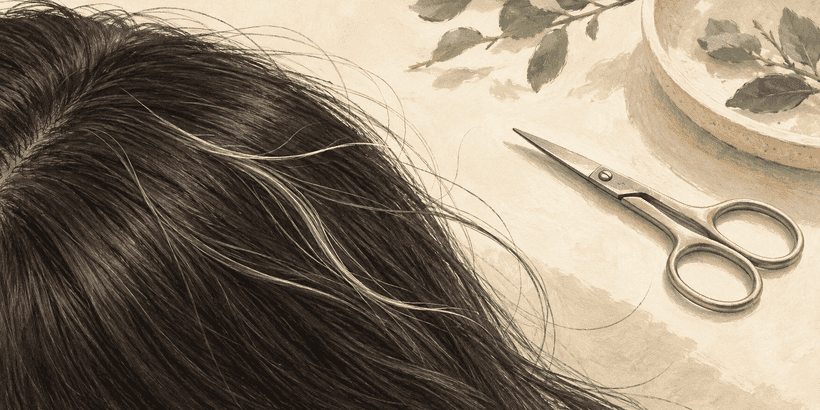
Why one gray hair does not turn into several
Hair color depends on melanin produced in the follicle. Removing one gray strand does not stop pigment production in neighboring follicles. Soonchunhyang University Seoul Hospital's dermatology guidance explicitly rejects the claim that plucking one makes two grow.myth
The hair that grows back will usually still be gray. Plucking a strand does not restore the follicle's ability to produce pigment.myth
Why repeated plucking is still a problem
The American Academy of Dermatology (AAD) warns that plucking gray hairs can cause thinning.aad Avoid repeatedly pulling hairs from the same area whenever a gray strand catches your eye.
One plucked hair does not mean you have immediately caused permanent loss. Repeated pulling is the concern. AAD's hair-loss guidance explains that habitual pulling can damage follicles; if they have not been destroyed, hair can regrow after the pulling stops.pulling
If an area you pluck looks sparse or becomes painful, stop plucking and have the scalp assessed.
Consider trimming a few stray grays
For a few conspicuous strands, consider shortening them with small scissors. Leave enough distance from the scalp to avoid cutting the skin, and avoid tugging the hair out. It will need trimming again as it grows, but this offers an alternative to repeatedly reaching for tweezers.
If graying is more widespread, dye can conceal the color. Hair dyes can irritate the scalp or cause allergic reactions, so follow the product's skin-test and application instructions.aaddye If itching or swelling develops, seek medical advice rather than repeatedly using the same product.dye
Does increasing gray hair mean you need supplements?
Gray hair alone cannot diagnose a nutrient deficiency. Family history influences early graying, and health problems such as nutritional deficiencies can sometimes contribute.aad
A 2026 single-hospital study compared people with premature graying against age- and sex-matched controls, including blood tests. Ferritin, vitamin B12, and vitamin D levels were lower in the graying group. The researchers did not follow participants after correcting deficiencies to see whether their hair regained color. The findings therefore do not justify recommending the same supplements to everyone with gray hair.study
If graying is progressing unusually quickly and concerns you, discuss its onset, family history, dietary changes, and accompanying symptoms with a clinician. Sudden, patchy, scarring, painful, or rapidly worsening hair loss also warrants a dermatologist's assessment. Our iron deficiency and hair-loss guide covers what to consider before taking iron supplements.
- Soonchunhyang University Seoul Hospital: Early gray hair and heredity (Korean).↩
- AAD: What causes gray hair, and can I stop it?.↩
- AAD: Hair loss causes — Pulling your hair.↩
- FDA: Hair Dyes.↩
- Kumar L, et al. A Demographic and Biochemical Profile of Patients with Premature Graying of Hair (Canities) at a Tertiary Care Centre: A Case-Control Study. Indian Dermatology Online Journal. 2026;17(3):374–379. A single-center case-control study, not a trial of supplementation.↩