
Not everyone who has a hair transplant must take the same hair-loss medication. If male- or female-pattern hair loss is still progressing, however, medical treatment may help preserve the nontransplanted hair and maintain a natural-looking result over time. Whether a medicine is appropriate—and when to stop or restart it around surgery—depends on the diagnosis, sex, medical history, adverse-effect risk, and surgical plan.practice-guidelinecurrent-guidance
Why consider medication after a transplant?
A hair transplant usually moves follicles from the back of the scalp into an area with less hair. It does not create new follicles or remove the cause of pattern hair loss. The existing, nontransplanted hair between and behind the grafts can continue to miniaturize.
This means the grafts may grow while the surrounding hair becomes thinner. Over time, density can fall again or a visible gap can develop between transplanted hair and the advancing area of loss. Hair-transplant practice guidelines therefore caution against treating surgery as a one-step permanent solution to androgenetic alopecia, which is an ongoing process.practice-guideline
The main purpose of medication is not to guarantee surgical success. It is to manage ongoing hair loss and preserve native hair.
What can finasteride do around a hair transplant?
In a key transplant-specific trial, 79 men aged 20 to 45 with androgenetic alopecia were randomized to finasteride 1 mg or placebo. Treatment began four weeks before transplantation and continued for 48 weeks afterward.finasteride-transplant
At week 48, the finasteride group had significantly better hair counts and photographic assessments in the scalp surrounding the transplant than the placebo group. The important finding was not that finasteride guaranteed graft survival, but that it could improve the nontransplanted hair around the grafts.finasteride-transplant
Finasteride molecular model by Ben Mills, public domain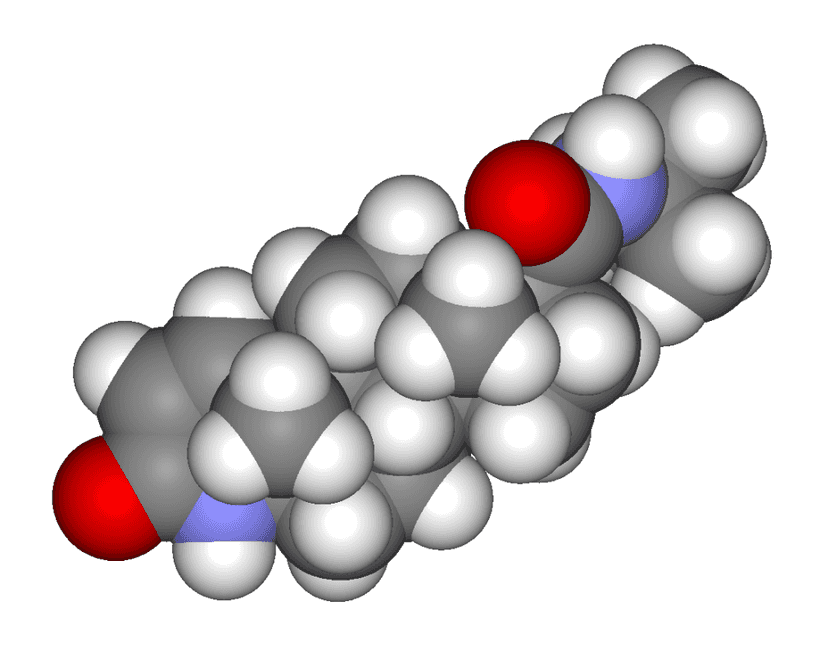
Image: Ben Mills, “Finasteride3d,” Wikimedia Commons. Released by the author into the public domain; unmodified.


The study involved relatively young men and lasted about one year. Its findings cannot automatically be extended to women, other causes of hair loss, different doses, or every long-term surgical outcome.
Does minoxidil improve graft survival?
Topical minoxidil has been studied for its potential to reduce early postoperative shedding or bring forward visible growth. A small study did not find a difference in final graft survival, although initial postoperative shedding was absent in some minoxidil-treated patients.minoxidil-transplant
Using minoxidil does not guarantee that grafts will survive, and not using it does not mean a transplant will fail. Shedding of the hair shafts after surgery is not the same as loss of the transplanted follicles.
A recent international expert consensus, acknowledging that practice is not standardized, suggested that topical minoxidil may be applied to the recipient area 7 to 14 days after surgery. This is consensus guidance, not a universal prescription for every patient.minoxidil-consensus
Should medication be stopped before surgery?
Do not stop or continue treatment on your own; check the operating clinician's instructions. Recommendations for minoxidil vary. One hair-transplant practice guideline advises stopping topical minoxidil one week before surgery because of a possible increase in bleeding related to vasodilation, but grades the supporting evidence as low.practice-guideline
There is likewise no evidence that every patient must routinely stop finasteride solely because of the procedure. Give both the surgeon and prescribing clinician a complete list of medicines and doses. Anticoagulants and antiplatelet medicines affect bleeding risk for separate reasons and should never be stopped without the clinician who manages them.
The same medicine is not right for everyone
Treatment depends on the diagnosis and the individual.
- Finasteride: This prescription medicine is used mainly for male androgenetic alopecia. Its potential benefits and risks, including sexual adverse effects, should be reviewed with a clinician. Someone who is or may be pregnant should not handle crushed or broken tablets.finasteride-label
- Topical minoxidil: It is used for pattern hair loss in men and women, but can cause scalp irritation or unwanted hair growth. Stop and seek medical advice for chest pain, rapid heartbeat, dizziness, sudden weight gain, or swelling of the hands or feet. It may be harmful during pregnancy or breastfeeding.minoxidil-label
- Low-dose oral minoxidil: Its use for hair loss is off-label and it is not interchangeable with the topical product. Blood pressure and cardiovascular risk require consideration, so it should not be started around surgery without a prescription and monitoring.minoxidil-consensus
- Dutasteride and other treatments: Approval status and individual risks vary by country. Being unable to use finasteride or minoxidil does not automatically make another drug appropriate.
Alopecia areata, scarring alopecia, and telogen effluvium require different strategies. The type and activity of hair loss should be assessed before transplantation.
What to ask if you do not want medication
Being unable or unwilling to take medication does not automatically rule out surgery, but it can change the long-term plan. Ask:
- Is my hair loss stable or rapidly progressing?
- How likely is the native hair—not the grafts—to thin further?
- Should the hairline and density be designed more conservatively without medication?
- How will donor hair be reserved in case another procedure is needed?
- What are the expected benefit, risks, and alternatives to each medicine?
For a younger person with active loss, planning for the likely future pattern and the limited donor supply is especially important.practice-guideline
When to seek a prompt assessment
Do not assume pattern hair loss if shedding is sudden, sharply patchy, painful, or accompanied by pus, marked redness, heavy scale, or smooth scar-like skin. Rapid progression or diffuse thinning that also affects the donor area deserves reassessment before surgery.
Bottom line
The most important role of medication after a hair transplant is usually to manage native hair that may continue to thin, not to hold the grafts in place. A randomized trial in men found that finasteride improved surrounding hair and overall density after transplantation, but that does not mean everyone needs the same prescription. The timing of stopping and restarting treatment is also not universal; it should be individualized by the surgeon and prescribing clinician.
Sources
- Mysore V, et al. Hair Transplant Practice Guidelines. J Cutan Aesthet Surg. 2021;14(3):265-284. doi:10.4103/JCAS.JCAS_215_20.↩
- Nestor MS, et al. Treatment of Androgenetic Alopecia: Current Guidance and Unmet Needs. Clin Cosmet Investig Dermatol. 2023;16:1387-1406. doi:10.2147/CCID.S385861.↩
- Leavitt M, et al. Effects of finasteride (1 mg) on hair transplant. Dermatol Surg. 2005;31(10):1268-1276. doi:10.1111/j.1524-4725.2005.31202.↩
- Singh G. Effect of minoxidil on hair transplantation in alopecia androgenetica. Indian J Dermatol Venereol Leprol. 1998;64(1):23-24. PMID: 20921704.↩
- Vañó-Galván S, et al. Low-dose oral minoxidil and topical minoxidil: consensus recommendations for managing male and female pattern hair loss in hair transplant patients using a modified Delphi process. J Eur Acad Dermatol Venereol. 2026. PMID: 41782304.↩
- U.S. Food and Drug Administration. PROPECIA (finasteride) prescribing information. Revised 2012.↩
- DailyMed. Minoxidil topical solution USP, 5%—Drug Facts. Accessed 2026-08-25.↩