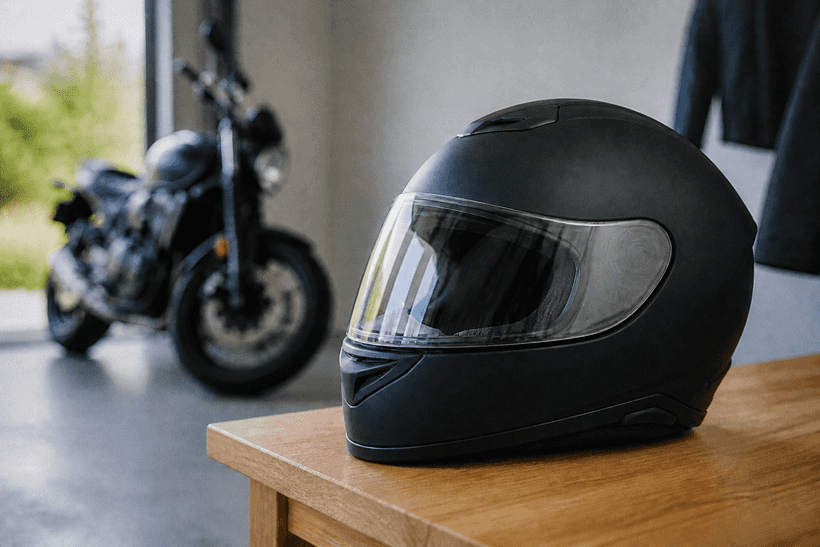
Avoid wearing a helmet for at least two weeks after a hair transplant. If it is tight or touches the recipient area, you may need to wait three to four weeks and obtain clearance from your surgeon. The timing depends on where the grafts were placed, how the scalp is healing, and the helmet's fit.consensusreview
Why not wear one immediately?
The recipient area is sensitive to pressure and friction soon after surgery. A helmet can brush the grafts as it goes on or off, press them with its inner padding, and add heat and sweat.
An international consensus involving 38 hair-transplant experts recommends avoiding pressure on the recipient area during the first two weeks. Its discussion advises particular care with pressure and direct sunlight during the first two to four weeks.consensus An earlier surgical review advises avoiding helmets for three weeks.review
These recommendations come from expert consensus and postoperative reviews, not trials comparing different helmets. There is no single day on which every helmet becomes safe for every patient.
A practical timeline
| Stage | General approach |
|---|---|
| First week | Avoid helmets that brush or press the recipient area. Pause activities that require a helmet. |
| One to two weeks | Crusts and swelling may remain, so continue to avoid pressure on grafts. |
| Two to four weeks | Ask the surgical team to check healing and where the helmet touches. |
| After four weeks | Many people can return to usual equipment, but ongoing pain, redness, or crusting needs review. |
These ranges help with planning rather than providing automatic clearance. Timing changes with frontal versus crown grafts, FUT versus FUE, and the location of the helmet padding.
Does the type of helmet matter?
A full-face motorcycle helmet or a close-fitting cycling or industrial helmet may rub frontal or crown grafts during fitting. Even a looser hard hat can cause trouble if its suspension band presses directly on the recipient area.
Before wearing one again, check that:
- swelling, drainage, bleeding, and marked tenderness have resolved;
- most scabs have cleared and the wounds are healing;
- the helmet can go on and off without rubbing the recipient area;
- no pad or band presses directly on the grafted area; and
- the surgeon has reviewed your healing and approved its use.
How to restart wearing it
Begin with a short fitting at home rather than hours of continuous use. Put the helmet on and take it off slowly, checking whether a pad or strap drags across the scalp. After 10 to 15 minutes, look for pressure marks, throbbing, bleeding, or drainage.
Clean removable pads according to the manufacturer's instructions, but do not modify protective equipment. Adding a thick towel or dressing can increase pressure and interfere with correct fit.
Where different helmets make contact
- Full-face motorcycle helmet: can brush the temples and frontal hairline while going on and off.
- Cycling helmet: crown pads and the adjustment system may press on grafts.
- Industrial hard hat: the suspension band can overlap a frontal recipient area or donor site.
- Sports helmet: is designed to fit closely and should not be loosened beyond its safety instructions.
What if you need a helmet for work or travel?
Do not ride or work without required protective equipment. Removing padding or modifying a helmet to make room for the grafts can reduce its protective function. Before surgery, arrange enough leave or temporary duties with the clinic and employer.
Stop wearing the helmet and contact the surgical clinic if new bleeding, increasing pain, pus, warmth, or spreading redness develops.
Bottom line
The basic rule is to avoid pressure on the recipient area for at least two weeks. A tight helmet or one that contacts the grafts may require a wait of about three to four weeks. Do not rely on the calendar alone: ask the surgeon to consider both scalp healing and where the helmet touches.
Sources
- Vañó-Galván S, et al. An international expert consensus statement focusing on pre and post hair transplantation care. J Dermatolog Treat. 2023;34(1):2232065. doi:10.1080/09546634.2023.2232065.↩
- Patwardhan N, Mysore V. Hair transplantation surgery. Indian J Plast Surg. 2008;41(Suppl):S56-S63. PMID: 20300332.↩